Category Archives: Nepal

Husband, Bollywood Star, Migrant Worker, Tourist: Everyone is Trying to Get in or out of Nepal

Turkish Airlines has landed

Turkish Airlines has landed

It’s been quite a week here in Kathmandu: the crash-landing on March 4th of a Turkish Airlines plane in Nepal’s only international airport closed it for four days. That meant about 80,000 people were stranded trying to get in or out of Nepal.

“We start digging the well when we see the fire” says a Nepali friend describing the level of preparedness for dealing with an airplane crash on the runway. Or as my husband, John, who was stranded in Bangkok, likes to tell our three boys: “You’re on your own, bud.” Hardest hit were the tens of thousands of Nepali migrants workers who not only had to bunk down on airport floors but who worried about losing, before they even started, the menial jobs for which they had mortgaged themselves for years to loan sharks.
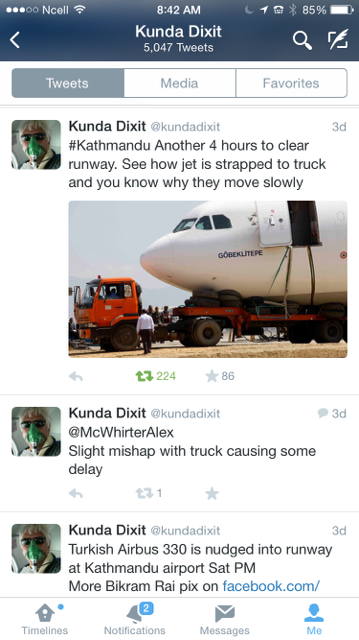
Twitter provided live feeds of the snail-like moving of Turkish Airlines

Twitter provided live feeds of the snail-like moving of Turkish Airlines

There was no government communication system in place to keep passengers informed but there some very dedicated Nepali journalists on Twitter. It was possible to follow the drama 24/7 in 140 characters or less. The disabled plane blocked the airport’s only runway, and every failed attempt to move it (there were many), every inch of molasses-slow towing, was documented in detail. The Nepali Times rechristened Tribhuvan International Airport as Tribhuvan Intermittent Airport.

On Day 2 of the crisis, after Thai Air told him that he and other passengers on the cancelled flight were on their own, John decided that he needed to adopt the DIY attitude that many Nepalis have towards their government: he decided to fly to India and cross the border to Nepal by car. On Twitter, Nepali journalists nicknamed this course of action the first Indo-Nepali automobile rally, and posted different route options. One small catch for many tourists: you needed an Indian visa that allows land crossings, a visa that John luckily already possessed. So instead of a quick three-hour flight from Bangkok to Kathmandu, he flew five hours to Delhi and then one hour to Lucknow, hired a car for the five-hour ride to the Nepal border at Nepalganj, a rather sleepy town about 14 hours by car from Kathmandu, and then took a small plane to Kathmandu. (While the Turkish Airlines plane blocked the runway for large international aircraft, enough of the runway was clear for small domestic aircraft to land, albeit in the opposite direction to usual landings at TIA.)
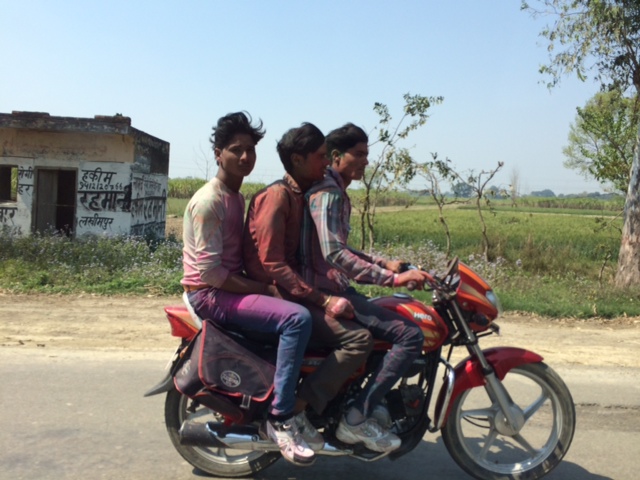
In India, on the road to Nepalganj. ©Johannes Zutt

In India, on the road to Nepalganj. ©Johannes Zutt

It was the major Hindu festival of Holi, so immigration staff in Nepalganj was skeletal on both sides. Getting an exit stamp on the Indian side was relatively easy, but on the Nepal side, the woman sitting in the immigration office insisted that she was not authorized to stamp John’s passport. Knowing that a future exit would require it, John refused to leave and the woman relented after telephoning someone in authority and, with John’s assistance, finding the appropriate stamp in a desk drawer.

Welcome to Nepalganj. ©Johannes Zutt

Welcome to Nepalganj. ©Johannes Zutt

When the airport opened at 7:30 p.m. on March 7th, the Nepali government announced it would remain open 24 hours a days to move stranded passengers. Airlines doubled and tripled their number of regular flights and by the next afternoon, the scene on both the ground and in the air was once again one of monumental chaos. TIA, a small airport with only one runway and nine parking bays, was trying to land 80 international flights a day (and many domestic ones).

Circling in the sky jam for a landing slot in Kathmandu.

Circling in the sky jam for a landing slot in Kathmandu.

FlightRadar24, which records live air traffic around the world, showed a massive sky-jam over Chitwan National Park, with as many as seven planes at a time circling for over an hour waiting to land. On the ground it wasn’t much better. Airplanes there sat on taxiways for another hour or more waiting to unload their passengers. Visa lines and baggage claim were a sea of packed human sardines. This is the beginning of the peak tourist trekking and mountain-climbing season in an industry hard hit by October 2014’s Annapurna snow avalanches and April 2014’s tragic icefall on Everest.

In the midst of all this chaos, Shah Rukh Khan (@iamsrk), a Bollywood star who is also a Nerolac Paints Nepal brand ambassador, was coming to Kathmandu to launch the company’s “green initiative”, aimed in part at encouraging people to convert their used Nerolac paint cans into flower pots. It’s hard to believe that on March 9th, his Falcon executive jet didn’t get priority landing. Regardless, someone at TIA decided that the best time to close the airport (again), so as to move the Turkish Airlines plane, was around the time this Bollywood personality landed. It was also the busiest time in the sky. Three incoming flights were rerouted to other cities when their “holding fuel” ran out and others circled endlessly in the skies over Chitwan. In the Nepali border town of Raxaul, some worried that the unrecognized dense air traffic were UFOs.

What about those UFOs?

What about those UFOs?

As for John – he will soon have to leave again, hopefully by plane and on a non-delayed, non-stop flight.

Marching Forth on March 4th – a letter as a gift

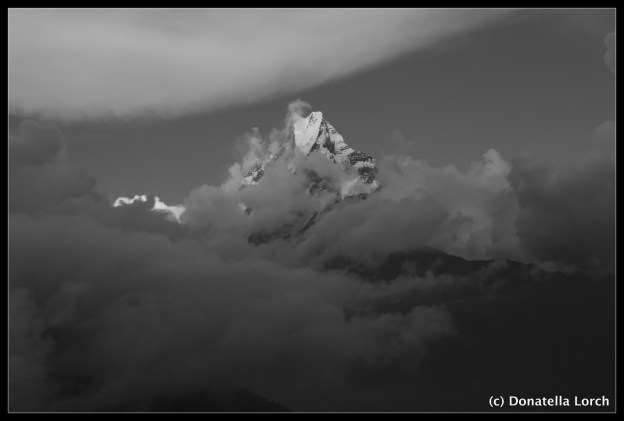
On top of the world - Mulde Peak just above Dobato in the Sahdow of the Annapurnas. ©Donatella Lorch

On top of the world – Mulde Peak just above Dobato in the shadow of the Annapurnas. ©Donatella Lorch

I have a dismal memory. That is the main reason that I write yearly birthday letters to my family. It is also the one birthday gift that I expect from my three sons and daughter. My husband is not as easily coercible. But I write because I am scared that the longer I wait, the more the past will blur. The selfish endgame that I pound into my kids is that the gift will always be there.

Lucas, you hit the double digits on March 4th in Nepal and you already have nine of my yearly letters in hard copy, on your Aunt Vinny’s hard drive in New York and not on one but on two external hard drives (our entire lives on “earthquake back-ups” since we live in Kathmandu, the land of potential cataclysmic earthquakes.) Yes – I overcompensate and over prepare but someone in our family has to right?

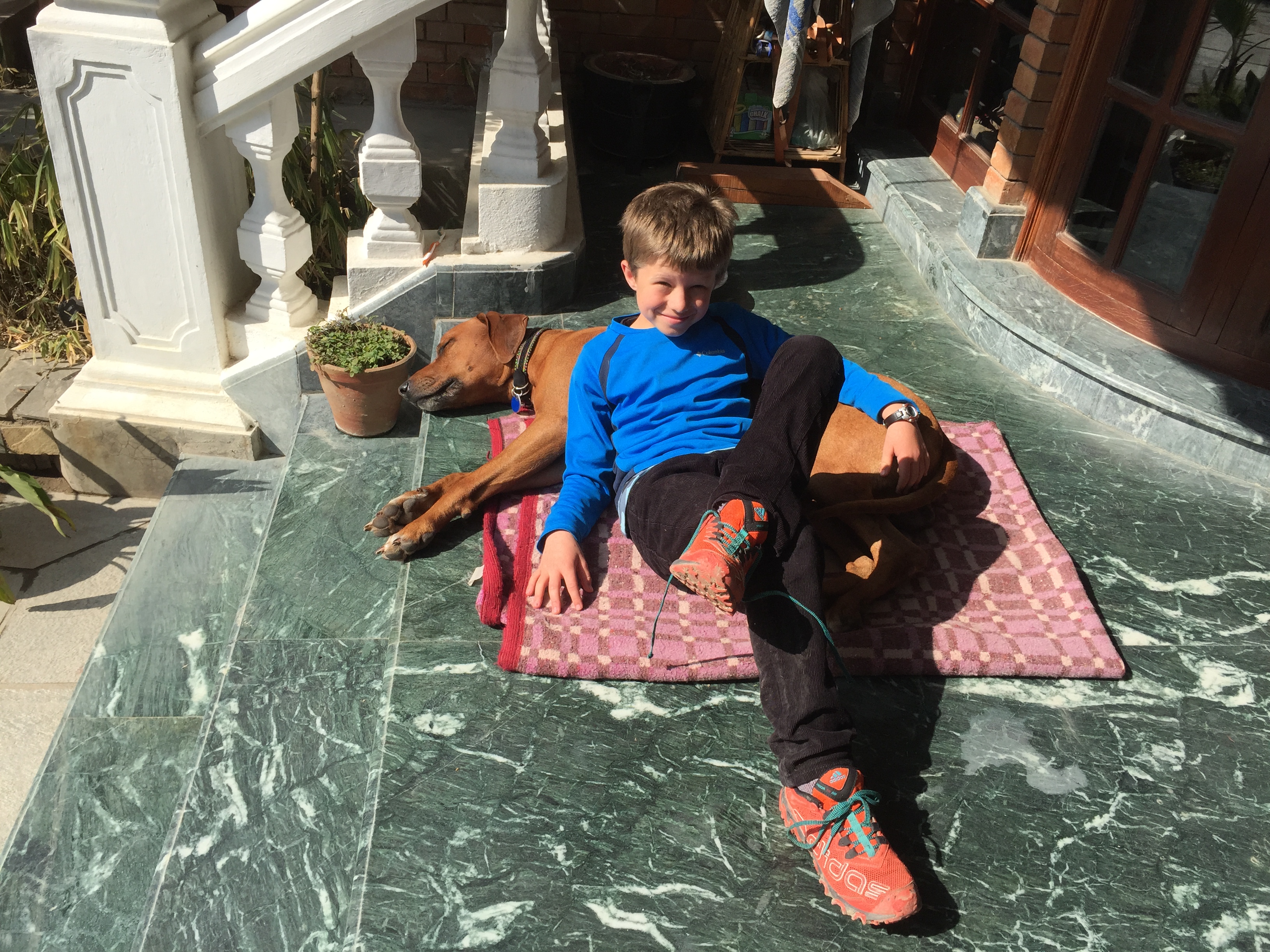
The inseparables: Lucas and Biko searching for the the first Spring heat.©Donatella Lorch

The inseparables: Lucas and Biko searching for the first Spring heat.©Donatella Lorch

The other night, your beloved and huge dog Biko woke me up at 2AM, whining and moaning and in need of dashing out to our lawn regardless of the torrential rain storm buffeting the Kathmandu Valley. No doubt a race induced by my feeding him a large portion of raw water buffalo for lunch. In hindsight, I admit I was overzealous with a potentially misguided desire to appeal to his carnivorous ancestry. I then tossed awake for hours, incapable of mindful mindlessness, while you lay asleep near me. For over a year, Dad has had to live in Dhaka, trying to come home for short weekends to visit us in Kathmandu. You never complain though on occasion you’ll whisper that you miss him. Part rational philosopher and part charming manipulator who knows my earthquake anxieties well, you reasoned with me that it was best for us to share a bed as Kathmandu winters are bitter cold and its better to be together if the earthquake hits us in the middle of the night. I acquiesced as you slip back into your bed with a snake’s ease when Dad’s in town.

Our family size has been slowly shrinking year by year as your siblings headed off to college and boarding school in North America and this year I noticed how much we had also become companions. We share this quirky intense world that is Kathmandu. You get it. You love it. Somewhere in between your obsession with war planes, the Marine Corps and LHAs (Landing Helicopter Assault ships – admittedly I did introduce to you The Belleau Wood, the LHA that I was on as a reporter in 1995), you have an innate ability to live in the instant which I know keeps me grounded. We think its normal to have open sewers on our street and we share a mutual exasperation about the ubiquitously dumped garbage. You walk shot gun with a bamboo lathi keeping stray street dogs at bay when we take Biko for long weekend hikes and you don’t mind that we live in the Kathmandu Valley urban boondocks which makes visiting friends a bit complicated. “It’s good that we live here on a ridge,” you explained to me the other day. “This way we are above most of the pollution and the black carbon here will only shorten my life by a few days.”

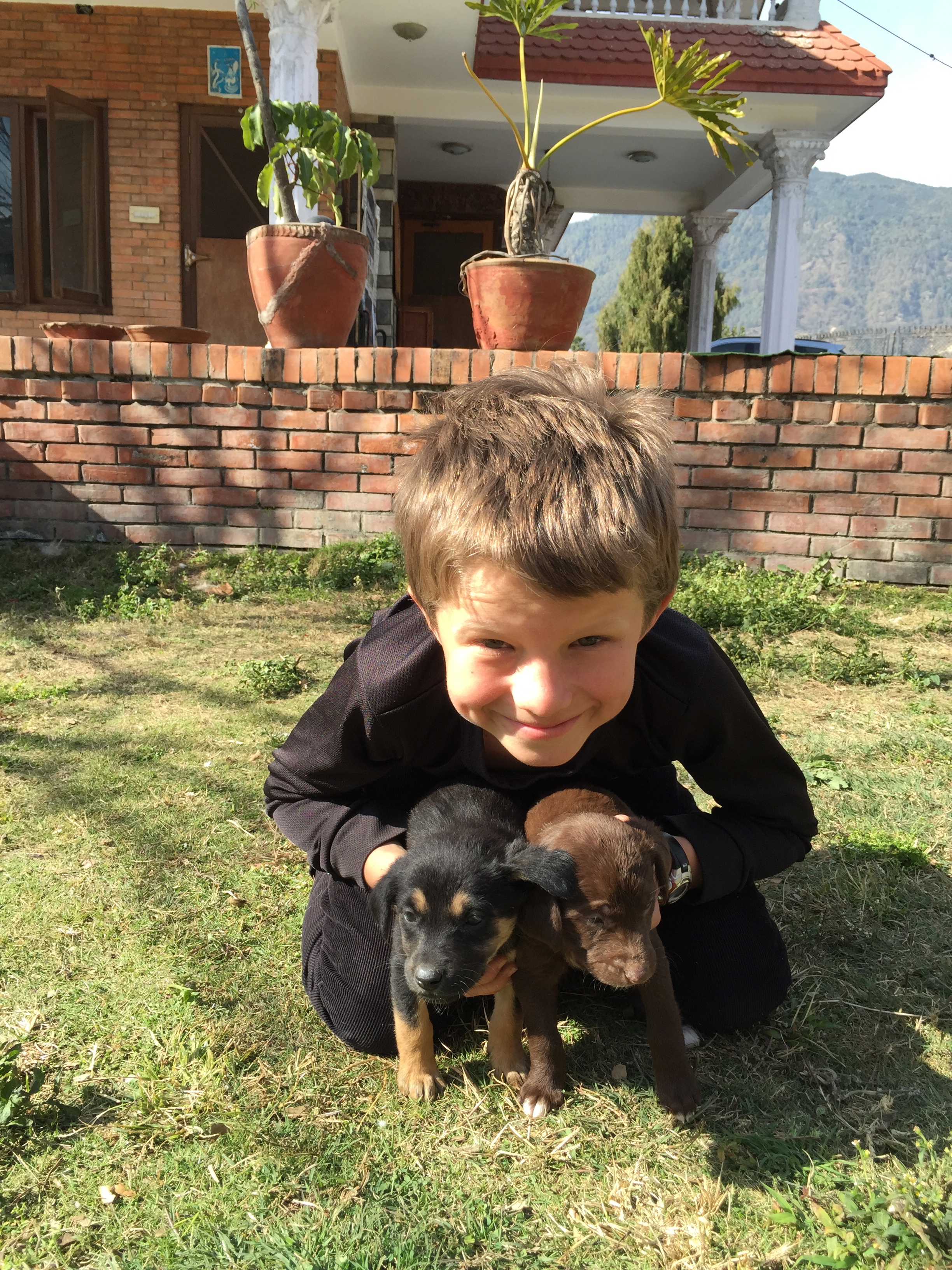
Lucas with two of Kali's nine puppies, stray dogs we rescued on our street. Now at the Kathmandu Animal Treatment Centre. ©Donatella Lorch

Lucas with two of Kali’s nine puppies, stray dogs we rescued on our street. Now at the Kathmandu Animal Treatment Centre. ©Donatella Lorch

Some might say that I am an over protective mother. I am not keen on heading out of town and leaving you with friends. Yep – that damn earthquake phobia again. But I don’t think age should decide whether or not you witness the realities of life around us. I took you to Pashupatinath where you saw not one but three on-going cremations up close and personal. We have a cremation site down the road from us and when in use, you’ll point out that it “smells of BBQ” when we drive by. Like the open air butcher shacks, the ubiquitous Hindu shrines and even the occasional elephant strolling  among whizzing motorcycles with half a tree on his back, it is all now a normal routine. I find it ironic that you were baptized a Catholic and both Dad and I used to be practicing believers but you seem to know more about Shiva and Laxmi, Ganesh and Vishnu (the Nag and the roiling sea of milk) than about the bible. You’ll point to a motorcyclist dressed all in white and say with your British-Nepali lilt: “Mum, that man is in his 13-day mourning period for his father.” You cheer up on days when the Maoists declare city-wide, non vehicular traffic strikes because it means biking to school. Every week you watch all the New York Times on line videos (using up all my iPad battery power) and on Dad visits, World War II has taken  up entire afternoons  drawing out the siege of Stalingrad and then the fall of Europe on restaurant paper under-plates.

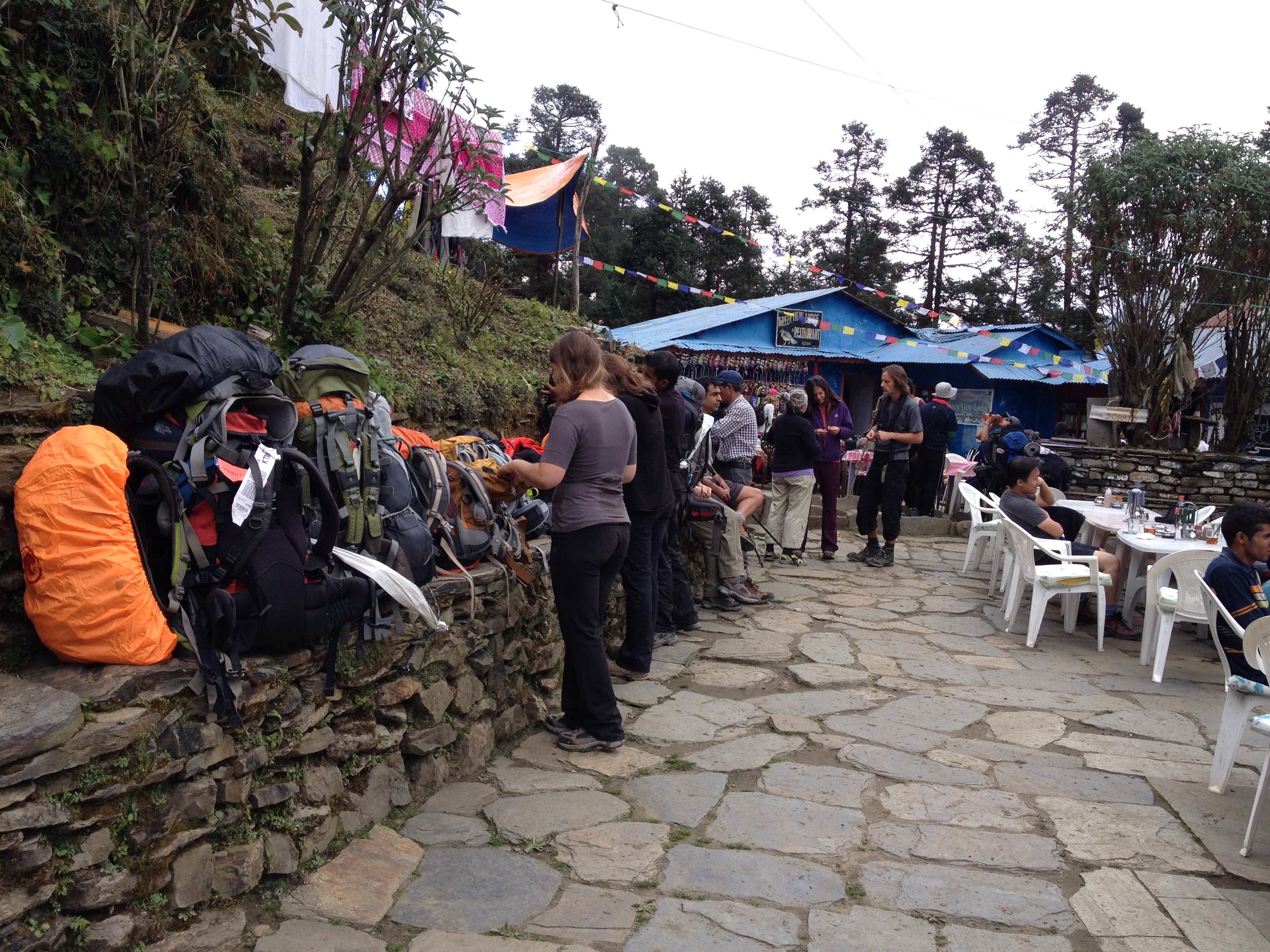
You are my reason and my excuse to explore. I owe you a debt of gratitude. This year, two trips have deeply influenced how you feel about living so far away from the rest of the family. You and I and our friends, Milan and Kunda, trekked the Annapurna Circuit past the horrific tourist traffic jams to the isolated refuge of Dobato, surrounded by the Annapurna and Machhapuchre peaks. Maybe it was the Zen-provoking feeling of hiking upto eight-hours-a day (with your heavy day back) though all I felt was sore feet, or the hours with nothing to do but watch the 8000meter peaks through sunshine, snow and hail, the ubiquitous runny dal bhat or the frigid nights, wearing all our ski clothes. You had only one sentence for the aches and pains I suffered: “Trekking is really the best Mum.”

Romping in the sands and dunes of the Rub'al Khali Desert in Oman. ©Donatella Lorch

Romping in the sands and dunes of the Rub’al Khali Desert in Oman. ©Donatella Lorch

On our agenda for this new year of yours: we still have to work on convincing Dad to trek. I also learned that as a nine-year-old, you – unlike your mother – are a gifted diplomat. Thank you for voting with me to visit the Rub’al Khali desert in Oman and overriding Dad’s veto. And thank you for deftly manipulating the tension between the two of us as the sun went down on the desert dunes and Dad informed us he really did not want to be there. Then at dawn the next morning, with our legs shin deep in frigid fine red sand, you turned to me and just said: “I could stay here forever.”

On March 4th, you turn 10 years old. There are constants you bring with you: daily Facetime with Dad, your dog Biko, guaranteed wild summers with siblings and cousins and living with me. Everything else is an unknown adventure. With that in mind: March Forth.

The air that I breathe — my relationship with black carbon

I am old enough to remember the orange smog sitting over Los Angeles and the haze cloaking Manhattan, but my older kids, who grew up mostly in a much cleaner North America, consider my descriptions of air pollution family folklore. Then we moved to South Asia.

Nepali Darth Vader © Donatella Lorcj

Nepali Darth Vader
© Donatella Lorch

In Kathmandu, especially during the dry rainless winter months, the air we breathe dictates a fashion of sorts. Many people in Nepal’s capital wear multicolored dust masks. Women in saris or jeans wear them in pink and red, toddlers wear them, taxi and bus drivers wear them, police and army like them in black or camouflage. The swarms of motorcyclists that make the city a hair-raising place to drive look like Darth Vader, with masks or scarves under their helmets covering all but their eyes. Masks are so ubiquitous that the city’s many ATMs post big signs requiring that helmets and masks be removed before entering the booth.

Mask Instructions at a city ATM. © Doantella Lorch

Mask Instructions at a city ATM. © Doantella Lorch

Air pollution here is visible, touchable, intimate. The scientific name for the pollution that we breathe in Kathmandu is black carbon particulate matter, derived mostly from burning fossil fuels and suspended road dust. It’s the black grit that I wipe off my patio chairs twice a day and blow out of my nose. It’s the thick grey yellow haze that swallows up downtown Kathmandu during the driest winter months. It’s the black cloud-belching dilapidated trucks, the towering brick kilns that dot the valley spewing out their thick white spirals into the sky. It’s the black plume that wafts out of the humming metal-caged streetside generators. It’s the road dust coagulating upwards in clouds around the ubiquitous road construction sites. Fly in on a  winter day and admire (yes there is a level of dark depressing awe) how the plane slices through a flat layer of continuous thick greyness just before it lands.

Landing in a winter Kathmandu. © Donatella Lorch

Landing in a winter Kathmandu. © Donatella Lorch

A mere 15 years ago, Kathmandu had clean air. Two factors transformed a valley that tourists called Shangri La. A decade-long Maoist civil war triggered a mass exodus of people from the countryside into Kathmandu, growing the valley population by more than 40 percent, to 3.5 million. Though infrastructure remains poor, rapid urbanization as well as easier availability of bank loans filled the valley with cars and motorcycles. By 2006, the demand for electricity had outstripped supply in a country that turns on its lights mostly with hydropower. Now more than ever, with winter power cuts reaching 18 hours-a-day, many businesses and households rely on diesel generators to provide power.

Generator Diesel - Kathmandu's largest polluter © Bhushan Tuladhar

Generator Diesel – Kathmandu’s largest polluter © Bhushan Tuladhar

According to the Nepal Oil Corporation (NOC), up to 40 percent of the country’s total diesel consumption is being used to generate electricity during power cuts. In 2012, NOC estimated that the country generated roughly 531 MW of electricity from diesel generators, filling a 35% power deficit. Tons of Black Carbon, one of the principle agents of global warming and the second largest warming agent after carbon dioxide, are being pumped into the valley.

      The Kathmandu valley is a bowl surrounded by hills that sometimes prevent pollution from dispersing. In the winter, the cold nighttime air doesn’t lift, creating a lid over the city and locking in the previous evening’s black carbon particulate matter. There is a reprieve during the summer months, when monsoon rains knock the black carbon down and improve daily air quality.

Measuring air quality is no longer done by the government. Kathmandu used to have six stations monitoring air quality but the last one fell into disrepair in 2006. It is now done on a case-by-case basis by Kathmandu-based ICIMOD ( International Center for Integrated Mountain Development). Nevertheless, the 2012 Environment Performance Index (EPI) ranking listed Nepal 130 out of 132 countries in terms of air pollution impact on human health and environment.

This view used to be commonplace but in winter it only appears after a rare winter rain. © Donatella Lorch

This view used to be commonplace but in winter it only appears after a rare winter rain. © Donatella Lorch

I knew these facts before I moved here but I looked at them differently when I began to live them. It’s the part of me that thinks I can be in control. I live on a ridge as far south of the Ring Road as commutably feasible. It helps me to know that the wind that blows across my place flows across the rural hills to the southwest and then across the city to the north. Most Nepalis don’t wear masks here. As a meager contribution to better air quality, I never use my own generator but have outfitted the house with enough solar power to power a fridge, the TV, wifi as well as a reasonable number of lights and outlets. But my ability to afford this alternative energy puts me in a minority. I have noticed subtle health markers. My colds come in the winter’s driest months of February and March and last weeks, not days, followed by chronic coughs. Nepal has no reliable hospital statistics on the increase of COPD(chronic obstructive pulmonary disease) or other lung illnesses.

Bidya Banmali Pradhan, an associate coordinator for the Atmosphere Initiative at ICIMOD, has been tracking pollution patterns in Kathmandu for over a decade. ICIMOD is presently working with the government to set up a new monitoring station and is studying pollution’s socio-economic effect. There is no doubt that pollution will increasingly hurt tourism. Already, the big attraction of snow-capped mountains surrounding Kathmandu are only visible after a rare winter rain or a Maoist strike that bans all motor vehicles for the day..

SMOKE

SMOKE

Nepal’s climate, like much of its politics, is hostage to its huge southern neighbor. While the Kathmandu Valley has 120 brick kilns, the bordering Indian state of Bihar has about 30,000, says Pradhan. The winds carry black carbon into Nepal’s Terai and beyond, building the large Atmospheric Brown Cloud that moves from India into Tibet and beyond, the black particles slowly melting the Himalayan glaciers. The Terai, once a tropical winter refuge for Kathmandu residents, has been unexplainably blanketed in frigid fog for several years. This year, ICIMOD is convening a regional meeting of scientists to study this phenomenon.

Fog also seems to carpet northern India and Bangladesh for much of the winter. My iPhone reads it as “Smoke” for Delhi. Fog+Smog=Smoke, explains Pradhan. I find the winter air quality in Delhi more disturbing than what I breathe in Kathmandu. I measure taste and feel. In a recent week there, I rarely saw the sun. A pea-soup fog sat on top of the city like a metal pot cover. The air was cold, clammy, immobile, dense. Lucas, my nine-year-old, thought holding his breath might work during our Tuk-tuk rides. Flights were delayed for hours due to lack of visibility.

Kathmandu traffic adds to black baron emissions. © Donatella Lorch

Kathmandu traffic adds to black carbon emissions. © Donatella Lorch

As I reflect on these experiences, I realize that I have a front-row seat on a major climactic change. The National Academy of Science has done the first long term study of climactic change and pollution impact on Indian agriculture says there is a significant loss in rice and wheat crops due to black carbon.

Pradhan says she does not wear a face mask. She notes that the only real protection against black carbon is from an N99 or N95 masks that are not sold in Nepal. She has tested it and the filter turns black every 24 hours and needs to be replaced. She is philosophical about her home country.  “Once you are put in an environment, you feel normal,” she explains. “But when you come from cleaner places, you definitely feel the difference.”

In Kathmandu, I see it, I feel it, I smell it. And I too do not wear a mask.

To Mina — With Love

Ready for hiking during hunting season ©Lavinia Lorch

Mina ready for hiking during hunting season  2013 ©Lavinia Lorch

I just clicked on the New York Times “most emailed” article on Tuscany and Machiavelli and sent it to my mother. Machiavelli was the last class she taught before retiring as a professor at Columbia University and I thought what better way to connect across the miles on her birthday. I’ve lived overseas for six years now and distances are still tough to bridge. Between Kathmandu and New York, the 10hr and 45min time difference means email and Facetime have been my two main ways of communicating with her. She has long ago given up my childhood companion, her manual olive green Olivetti typewriter, for the less noisy touch of Microsoft Word and Gmail. Today Maristella, known these days to her children and friends alike as Mina, turns 95.

In the jumble of the everyday, the every year, the talk of weather and health, of ISIS and Hong Kong protests, and my mother’s adamant arguments that I should go back to studying Sanskrit since I live in Nepal, I never seem to have found the time or the patience to articulate what only I know and only I have experienced as her youngest child. I am sad that yet again, living half way around the world, I am not celebrating with her.

Mina with her grandson Lucas this summer holding up the poster for the launch of her most recent novel ©Donatella Lorch

Mina with her grandson Lucas this summer holding up the poster for the launch of her most recent novel:”Beyond Gibraltar” ©Donatella Lorch

My mother never bought me a doll. It was not her way. She prefers to weave tales, some real, some fantasies and some caught in between the two. She put me to bed with them and on long car rides between churches, museums and ruins in Europe, I’d curl up my head on her lap and follow the exploits of Alexander the Great or the battle of Thermopylae or my mother’s adventures as a partisan in World War II Rome. I can still feel the silky touch on my cheek of her brightly colored scarf that she lay over my head to block out the afternoon sun. Occasionally it was replaced by a sharp cornered road map. As an adult I became aware that my mother has no sense of direction and therefore the map was without doubt not used to guide my father.

Mina writing in the second volume of the family book. © Donatella Lorch

Summer 2014 -Mina writing in the second volume of the family book. © Donatella Lorch

As I grew older, and was introduced by her to the wonders of books, I learned to leverage reading knowing that Mina would let me skip washing dishes if I went off to the couch to read “War and Peace.” If reading became my escape and her tales of wars ignited my desire for adventure, we also clashed a lot on the way. I had to learn French, Latin, then Greek and when I eventually convinced her I could drop Greek, she replaced it with German. That meant that every weekend, hours were spent butting heads on homework assignments.

But exploring has always been our special link. Though more than 40 years of her life have been spent at Columbia University, she, like me, feels the need to see and smell and feel different worlds. My mother has kept all of my hundreds of loneliness-filled aerogrammes I wrote her during a post college year studying Chinese in Taiwan and then wandering South Asia. She has gotten on many planes to visit me and not to reach idyllic vacation spots. In Peshawar, Pakistan, where I was a stringer for The New York Times, she insisted on visiting refugee camps and the families of the Mujaheddin fighters I travelled alongside in Afghanistan. She ignored my strict instructions not to interfere in my reporting and asked Abdul Haq, a senior Mujahed commander (who was later killed by the Taliban in 2001) to swear to her his men would keep me safe. The following year when at the UN General Assembly in New York, Abdul Haq dropped by her apartment with a dozen red roses.

Mina's 93rd birthday in Nairobi, Kenya. © Donatella Lorch

Mina’s 93rd birthday in Nairobi, Kenya. © Donatella Lorch

In Africa for the The New York Times, having “Mama” along on interviews opened innumerable doors though she did occasionally weasel in time for her own questions. Before I could begin my interview with Kenneth Kaunda, the legendary first president of independent Zambia, Mina and Kaunda opined for over half hour on every topic from St. Augustine to Apartheid and World War II. When I covered post- genocide Rwanda before the wide-spread use of the internet, Mina sent the Hotel Milles Collines daily faxes to me commenting in detail on my day’s article. They were all written in her scrawling, looping, mostly illegible handwriting and my response always included: “Please type!” When I told her I planned to leave The New York Times for NBC News, Mina, whose New Yorkness is defined by the Old Grey Lady, switched to Italian, her language for the most serious of conversations: “Ma sei pazza?” she asked me. “Are you crazy?” She did eventually come around.

Mina, always ready for a good time, with her grandson Alex, 2014 ©Lavinia Lorch

Mina, always ready for a good time, with her grandson Alex, 2014 ©Lavinia Lorch

These days she Facetimes to find out why my nine-year-old son, Lucas, is not learning Nepali history in the British school in Kathmandu and she is relentless about admonishing me to find sacred Hindu texts to study in the local university libraries. The fact that I am more interested in the legacy of a Maoist civil war and the problems of creating infrastructure in Nepal is irrelevant to the conversation.

Mina with her daughters Lavinia (left) and Donatella (right) summer 2014 in New York City. ©Johannes Zutt

Mina with her daughters Lavinia (left) and Donatella (right) summer 2014 in New York City. ©Johannes Zutt

My primary image of my mother has always been of her writing, teaching or reading. (You can find her novels on Amazon under Maristella Lorch). Her apartment bookshelves overflow with diaries, lectures and heavily underlined and annotated books. I tease her that its hard to go anywhere without meeting one of her students who probably will describe her reciting the Divine Comedy in a class 30 years gone. Lucas and I believe that our Rhodesian Ridgeback must be related as, like her, he insists on accompanied long daily walks. And every time Mina brings up the subject of walking – which is every day -I slip back to her childhood tales of when her own mother made Mina and her three siblings hike up the local mountain in Northern Italy, lugging their Latin homework and the pot to cook the lunchtime polenta.

Mina feeding her daughter Lavinia's Llamas and alpacas. 2013. © Lavinia Lorch

Mina feeding her daughter Lavinia’s Llamas and alpacas. 2013. © Lavinia Lorch

Scratch the surface and you’ll find the party girl who even hand carried a frozen turkey to Rwanda to cheer up my friends far from home. Mina never likes to be left out. At a get-together in Nairobi, she convinced a dashing blond British cameraman that what he really wanted to do was take her to Mogadishu (I blocked that plan). If there is an image I treasure of Mina in action is watching her barefoot in an ankle length wispy summer dress, dancing and twirling with my father on our lawn in the Catskills. She’s a woman who is always ready for another adventure. Age, after all, is just a number.

What an airport can tell you about a country’s growing pains

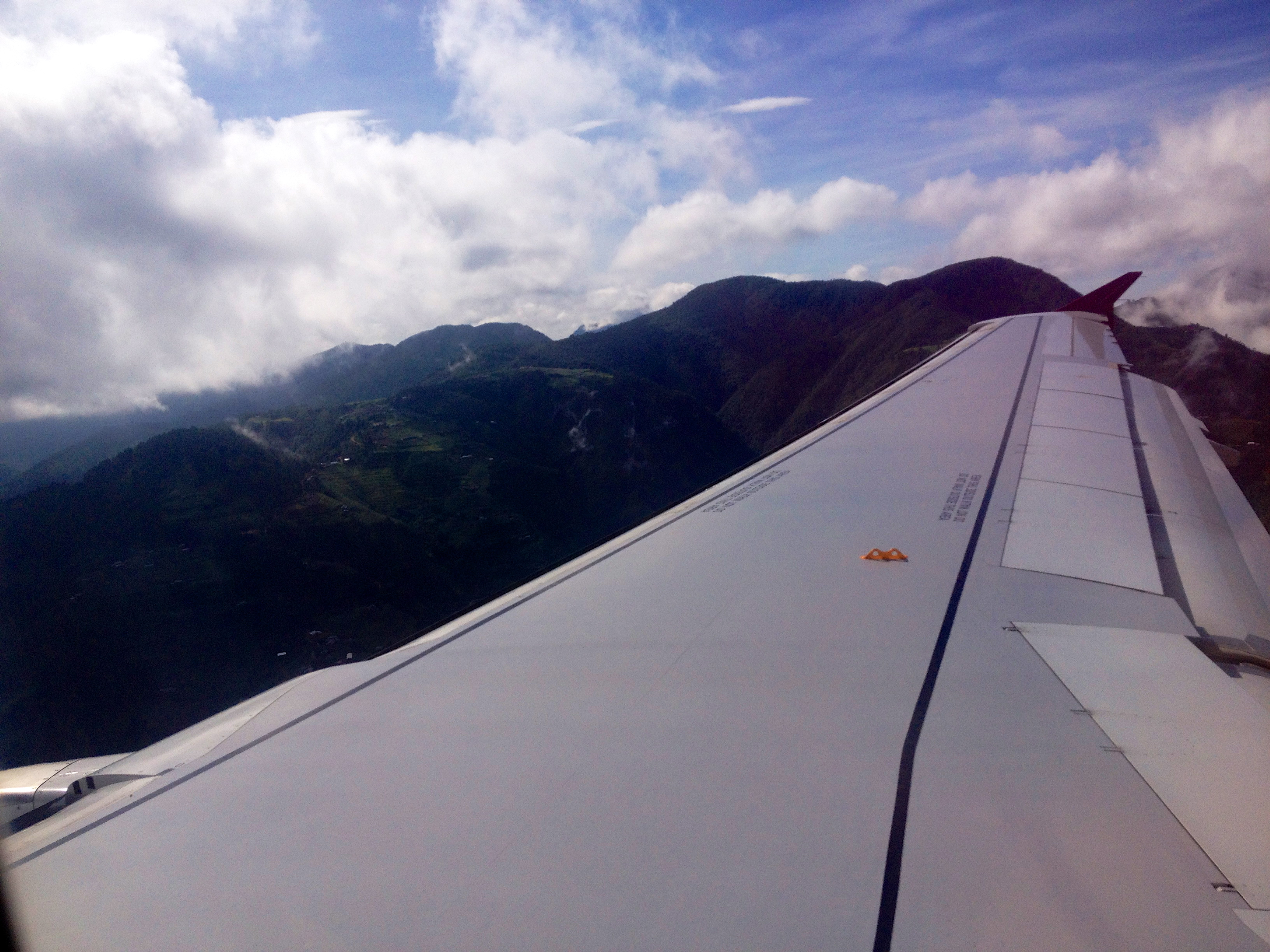
There is an intimacy to landing in Kathmandu.  From the plane window, you can see the wings skim the mountains as the hairpin dirt roads leading to perched villages close in above you. From my neighborhood, earth and sky rumble together with each approaching plane.

Down we go! © Donatella Lorch

Down we go! © Donatella Lorch

When I was 27, fresh from two years of reporting inside Afghanistan, the New York Times assigned me to cover the borough of Queens. To soothe my homesickness for the wind-swept arid mountain ranges I had left behind, every morning I slowed down as I drove past La Guardia airport, rolled down my window, and deeply inhaled the jet fuel. Then planes were about escape. In Kathmandu, 25 years later, it means connection.  I live near the main landing path, and the sound of a plane is both comforting and awe-inspiring. It means that neither the valley’s fog, smog, storms nor its unpredictable wind shear have closed Kathmandu’s airspace. Kathmandu is a pilot-only, visual-only landing, and every time I fly in or out, or listen to a plane overhead, I am reminded that technology is not solely in control but that just one person is leading the way in.

Economists refer to it as ‘connectivity’. A poor country cannot reach middle-income status unless its people can be connected by economic, social and political opportunities within their country and with other economies.  This cannot be done without roads and airports. The challenge is huge in Nepal, South Asia’s poorest nation, a vertical land where roads have to be carved out of steep, unstable cliffs that are prone to landslides and where mountains rise so fast and sheer that radar is not always relevant and planes have very limited options on how to get to an airstrip. Imagine terrain so perpendicular that pilots turn off their ground proximity warning system because the constant computer generated voice warning: “Terrain, terrain, terrain,” is not only obvious but also distracting.

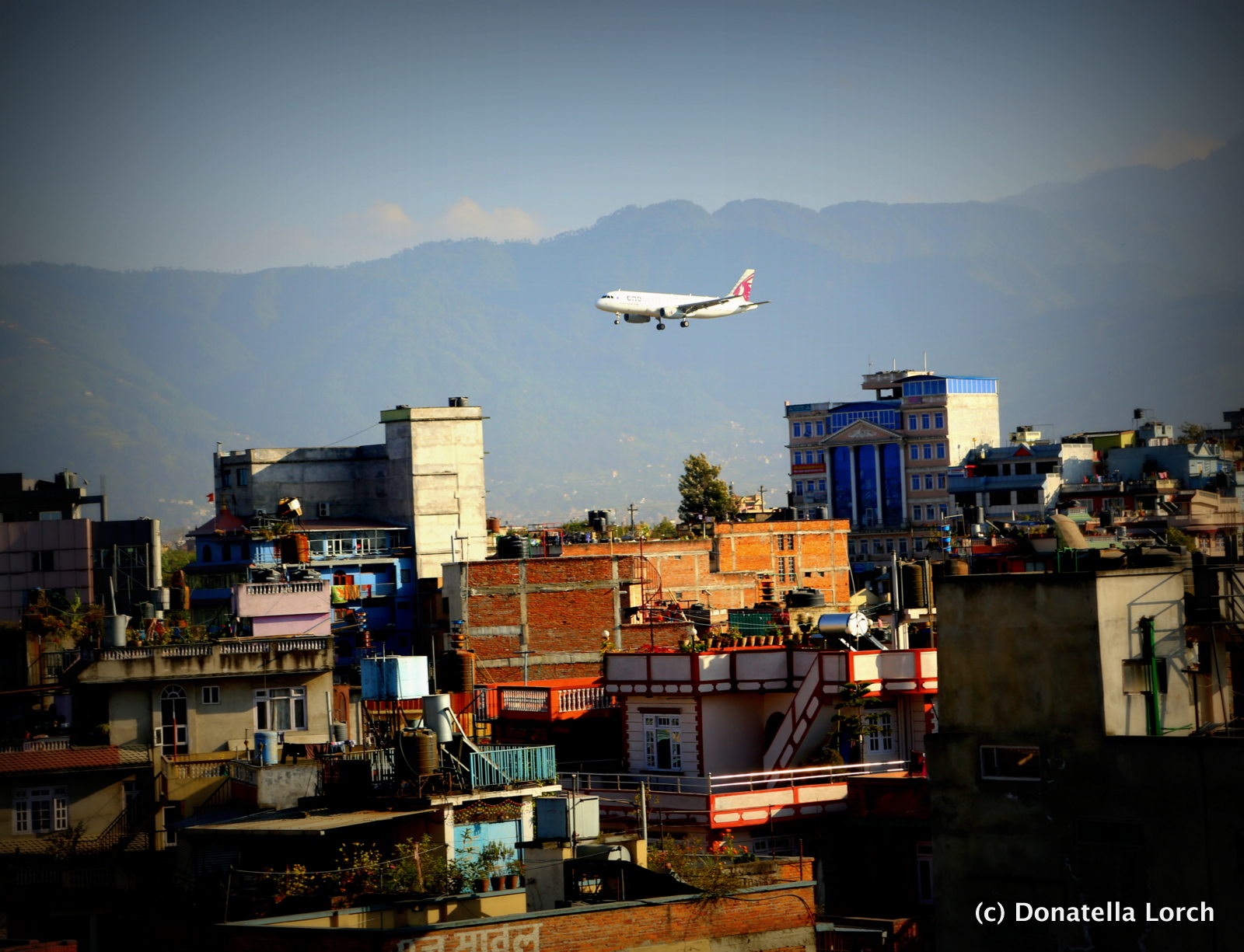
Planes landing at TIA skim Kathmandu rooftops. © Donatella Lorch

Planes landing at TIA skim Kathmandu rooftops. © Donatella Lorch

Nepal has 48 airports, mostly dirt strips precariously balanced on mountain tops or in narrow valleys, but there is only one international runway, Tribhuvan International Airport, an example of the vast complexities surrounding the issue of connectivity that go beyond just being able to land planes. In Nepal, tourism is the second biggest earner of foreign exchange, and with mostly dirt roads and vast numbers of road casualties, planes are critical to enabling tourists to come and continue to fuel growth.

Yet what happens when tourists come faster than the existing infrastructure can accommodate? Set inside the city of Kathmandu, TIA is bursting at the seams. It has only nine bays, but almost 50 daily international arrivals and more than twice that number for national flights. Visas are available on arrival, but the line is long and the unbridled crowded chaos of baggage claim is only enhanced by an enveloping dark penumbra. Mandarin seems to be the most spoken tongue. According to the local papers, vast amounts of cash are also exchanging hands at customs, where several officials, including the acting director, are under investigation.

So close yet so far. © Donatella Lorch

So close yet so far. © Donatella Lorch

Nature is not always cooperative. Flights can stack up for hours circling outside the Kathmandu valley, over Chitwan National Park, a domino effect often started by winter’s morning fog and aggravated by vehicle and generator-induced smog or summer monsoon storms and wind shears. There is one landing strip in dire need of re-tarmacking. Last summer, earth worms infested the runway, attracting nearby birds and closing down the airport for a day.  When I fly in or out, I find myself glued to the FlightRadar24 app, scanning weather and delays. The international airline with most delays appears to be Turkish Air, which has the uncooperative 6:55 a.m. landing slot:  thick fog at that time often brings long landing delays and recently a flight was even rerouted to Bangladesh for the day because of it.  The radar system, only for international approaches, is 25 years old and was installed after two major airplane crashes caused by white-out conditions, but it is struggling to keep up with the rapidly growing traffic. With only a 30-mile radius and blind spots, it is scheduled for a much needed facelift and expansion.

Yet international flights are almost always full, especially the five daily jets coming from five different Chinese cities and the scores of flights from the Middle East and South East Asia—the latter often carrying Nepali migrant workers to and from their host countries. Business must be good as landing rights at TIA are more expensive than Bangkok and on par with Singapore, while refueling charges are extremely high (all fuel comes by truck from India). In addition, pilots need special simulator training for Kathmandu landings. Two airlines, Qatar and Korean Air, are now even using the newest technology, satellite-based GPS systems, that provide the pilots with more information and greater leeway during their landing approach.

As in every other sector in Nepal, there are many improvement plans afoot. The government wants to build two new international airports, and is actively pursuing the Chinese government for soft loans. But airports are also competing with projects such as hydropower plants, expressways to India and China, waste water treatment plants, drinking water for the Kathmandu Valley, and sewage systems for all their cities. The wish list is long, the government cash-strapped, and so far investment is only cautiously moving in.

TIA will be it for the next few years.  That means accommodating the dozens of extra weekly flights scheduled to start soon from China. I don’t see the two security check lines that snake through the length of the departure area getting any shorter.

In Nepal, a perfect storm leaves a trail of devastation

Last week, trekking the Annapurna circuit with my nine-year-old son, Lucas, we hit a deserted, particularly tough patch of trail that had been partially swept away by a landslide. Single file, one foot in front of the other, five of us gingerly and slowly made our way across a six-inch-wide uneven slanted ledge, a sheer cliff up to our left and a sheer precipice to our right. The previous day’s rain had soaked the shale underfoot and it moved slightly with our weight. Our guide shouldered Lucas’ daypack and held his hand tightly instructing him not to look down the hill but just to focus on his feet. I struggled not to let my son see my intense fear of heights. Later, we both agreed it was just part of the incredible and inspiring week we had spent hiking.

Why do people come to Nepal to trek?  The ever changing mountains take your breath away every moment of the day.©Lucas Zutt

Why do people come to Nepal to trek? The ever changing mountains take your breath away every moment of the day.©Lucas Zutt

In October, peak tourist season in Nepal, the main trails of the Annapurna Circuit are full of foreign trekkers. ©Donatella Lorch

In October, peak tourist season in Nepal, the main trails of the Annapurna Circuit are full of foreign trekkers. ©Donatella Lorch

This is not an unusual occurrence in Nepal, a land where mountains are steep and unstable, and weather patterns can transform a landscape in a split second. Everyday, newspapers print stories of roads wiped away by landslides, of villages marooned by snow falls or Monsoon-swollen raging rivers swallowing homes and fields. “In Nepal,” my friend Kunda Dixit warned me on this trek, “everything is further and more difficult than it seems.”

This week, at the height of the region’s trekking season, a perfect storm hit Nepal killing at least 24 foreign trekkers as well as seriously wounding Nepal’s tourism industry. Two days after cyclone Hudhud made landfall in Eastern India, it tore into Nepal. Lucas and I had just returned to Kathmandu when the storms started. In the Valley, torrential rain fell unabated for two days accompanied by ear-splitting thunder. Flights were cancelled or rerouted, almost all airports were closed.

Even before Hudhud hit, the mountain afternoons were fogged in and had heavy rain. ©Donatella Lorch

Even before Hudhud hit, the mountain afternoons were fogged in and had heavy rain. ©Donatella Lorch

The weather in the mountains was even more vicious and unpredictable especially in the Annapurna Conservation Area Project (ACAP), a favorite for trekkers who call it the Annapurna Circuit, an area that encompasses 7629sq kms. Blizzards and avalanches in Manang, near Thorong La Pass(5416m)and at Dhaulagiri Base Camp killed the trekkers most of them foreigners. But in this vast isolated area frequented by a huge number of tourists, it is unclear who is still missing.

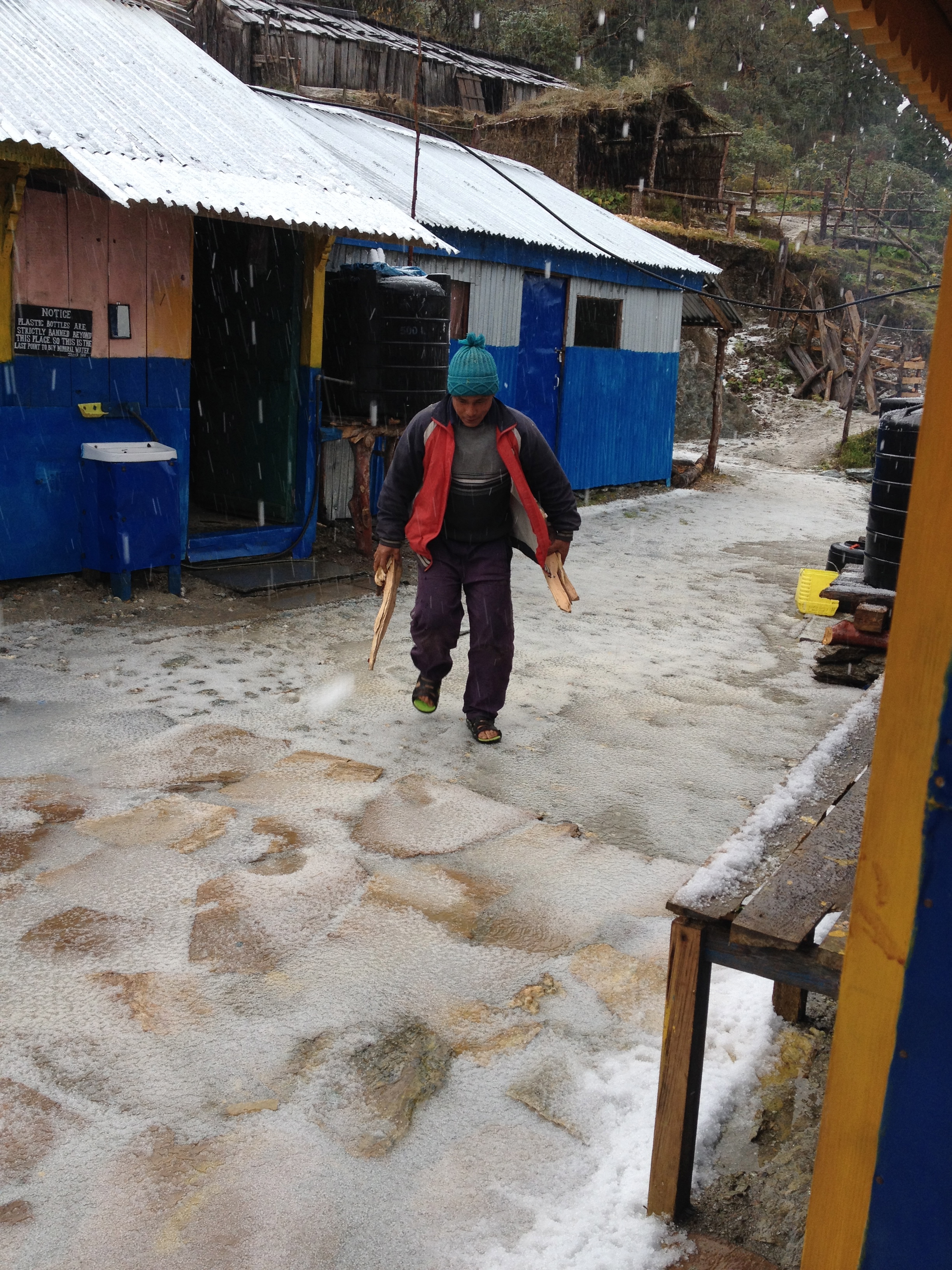
Before Hudhud hit, we had hail storms where we stayed over 3,000m ©Donatella Lorch

 We had hail storms where we stayed over 3,000m ©Donatella Lorch

One man slipped off a muddy path and fell into a river. He has not been found. We know about him because he was with many other trekkers. What about the more isolated areas of Manaslu and Langtang and the Tsum Valley? Even before Hudhud hit, the weather during our seven-day trek brought rain every afternoon turning into hail and snow at higher altitudes. Many of the smaller, narrower and desolate trails, like the ones we took, had landslides and were already water logged. We were four and had a guide as well as two porters (they moved way faster than we did) so we had safety in numbers as well as knowledge of the area. The only road to the northern part of the Annapurna Circuit takes you to Jomson. A good chunk of it is dirt and last month it was closed for a week because of rock fall. You can fly to Jomson, but only subject to the unbendable Nepali mountain rule: weather permitting. Even in good weather, flights cannot land in Jomson after 10am because of high winds. Fall and break a bone and you have two options: a helicopter or a multiple hour trip lugged in a stretcher to a road or an airstrip.

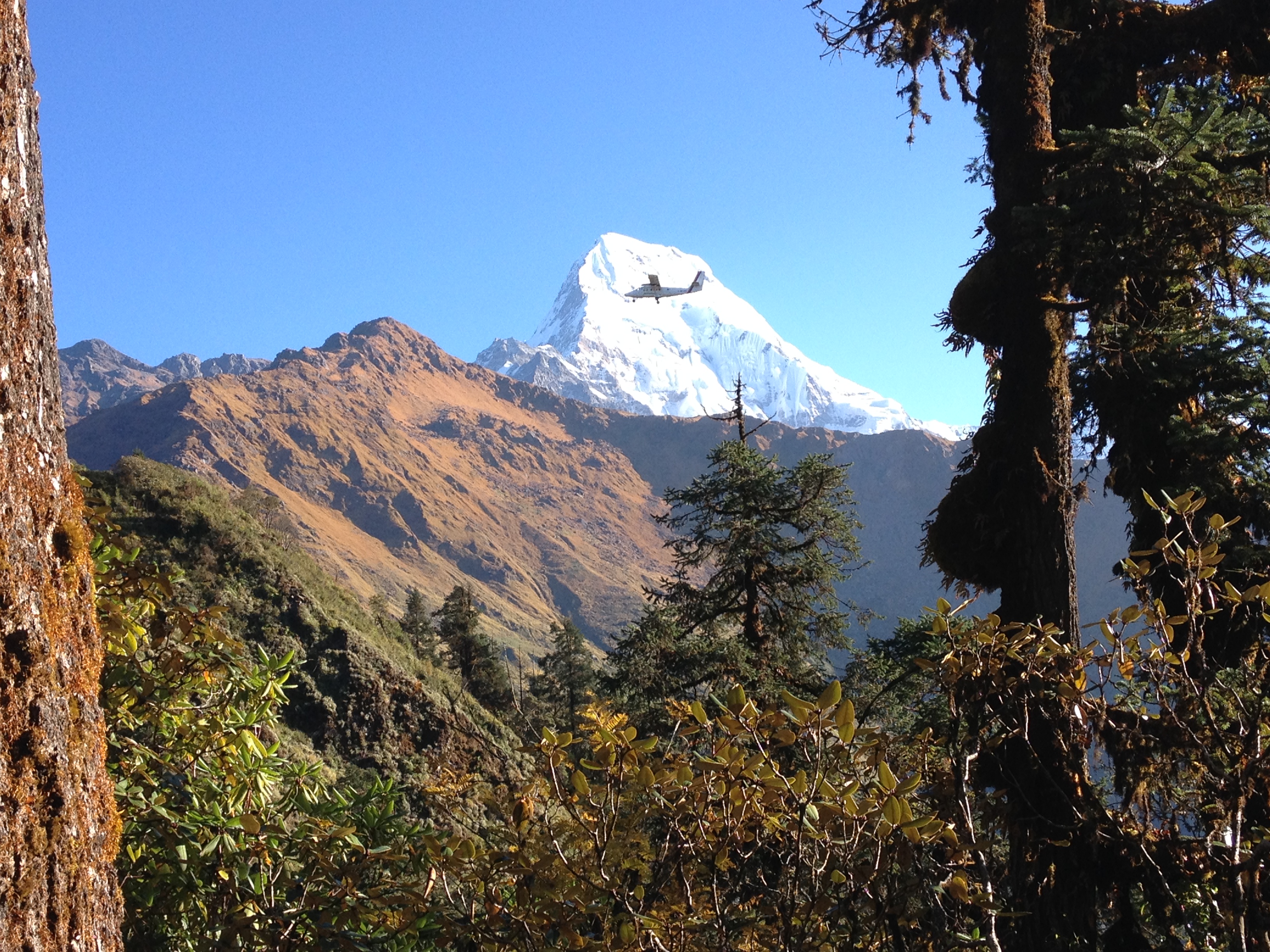
The flight Pokhara-Jomson offers stunning views and is very close to the mountain tops. ©Donatella Lorch

The flight Pokhara-Jomson offers stunning views and is very close to the mountain tops. ©Donatella Lorch

We met a group of three soloing young Americans from Colorado. They had no phones, an incorrect map (trekking map quality is poor in Nepal) and understandably a desire to get off the very beaten track and lose the hordes of other tourists. They had not registered at the US Embassy and their families did not know where they were going. Then there were the young Nepali tourists, climbing up the mountains in sneakers, without winter gear and most importantly not carrying any water. The Indian religious pilgrims that flock to the shrine in Muktinath near Thorong La Pass are also not prepared for winter. The women wear silk saris and thin shoes and ride up to the shrine on mules. And sometimes even if you are an expert mountaineer, the mountains can still claim you. Many years ago, Kunda’s brother, Kanak Dixit, had crossed the Thorong La Pass and was walking solo down past Manang when he slipped on the muddy trail and fell hundreds of feet down a cliff. He lay there badly injured for 48 hours before his brother found him. Kanak was helicoptered out and spent months in hospital. He still treks every year in all seasons.

It is a pristine Kathmandu afternoon today, a side-effect of a perfect storm. In front of me, the dark green of the valley’s hills melts into the emerald rice paddies, many flattened by the storm. My week in the high mountains taught me respect and made me fall in love. In the high mountains, I know the clouds and the evening cold will have already moved in. I hope the injured have been found.